The Myth of “It’s Cheaper to Make It Yourself”
My grandmother talks about sewing patterns being a quarter. A quarter. You could walk into a fabric store with five dollars and walk out with a whole outfit.
That was a different world.
What it actually costs to sew something in 2026
Here’s the real math. To sew a simple project from scratch:
- Pattern: $12-18 (on sale, if you’re lucky)
- Fabric: $10-15 a yard, and most projects need 1-3 yards
- Notions: Thread, interfacing, zippers, elastic, snaps, buttons — $5-15 per project
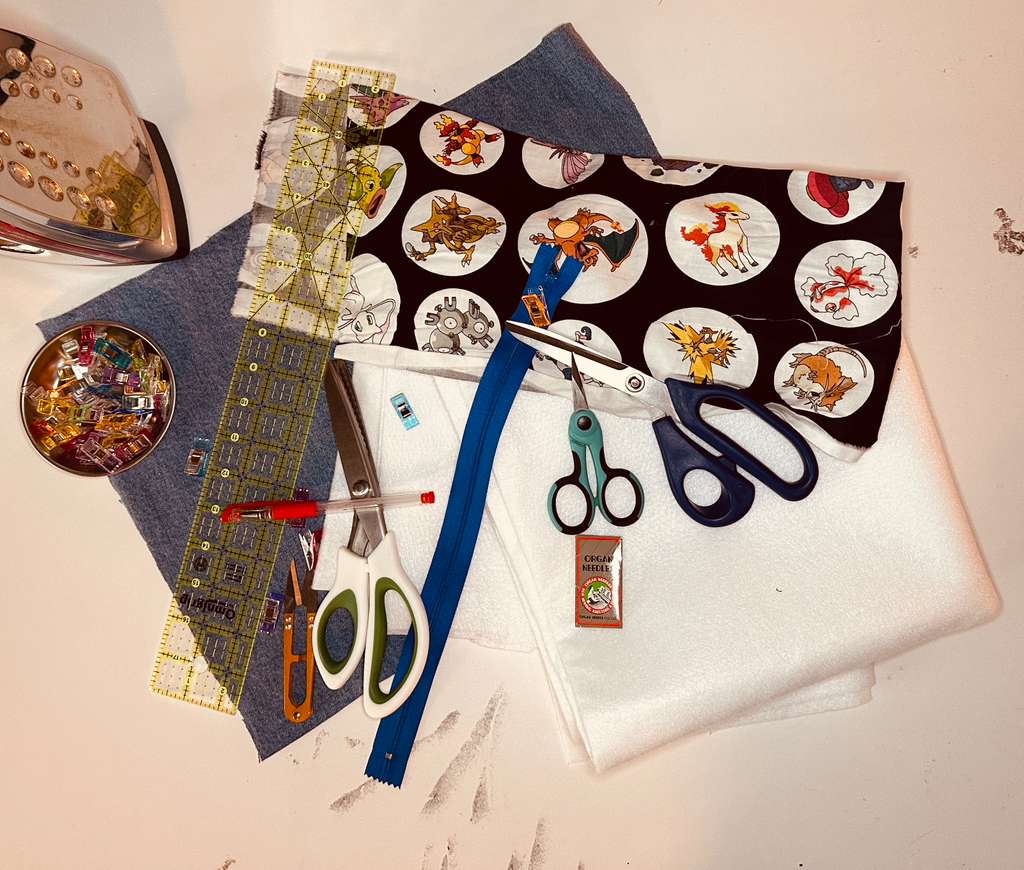
- Equipment: A decent sewing machine starts at $200. A serger is another $300+. Cutting mat, rotary cutter, scissors, pins, rulers — easily another $100 in tools.
A single handmade project can cost $30-50 in materials alone, not counting the hours of labor. Meanwhile, the mass-produced version sits on a shelf at Walmart for $8.
So why is handmade more expensive?
Because you’re not competing with another sewist. You’re competing with a factory that pays workers pennies, ships containers across an ocean, and sells through a corporation that treats “cheap” as a business model.
A roll of Muss Busters is $22. A pack of paper towels is $8. That’s not a math problem we’re ever going to win on price. And we’re not trying to.
So why would you buy handmade?
You’re not paying for the thing. You’re paying for how it was made.
When you buy from Amazon, you’re paying for fabric cut in a factory, sewn by someone making pennies, shipped across an ocean in a container, warehoused by a corporation, and delivered by a driver who doesn’t get bathroom breaks. That’s what “cheap” actually costs.
When you buy from a maker like Pinky, you’re paying for fabric that was probably thrifted, cut on a dining table, sewn by someone who learned from YouTube and swears at their serger, and handed to you — or shipped to your door — by the person who made it. The only person getting verbally abused in this supply chain is me, and only when I sew something inside out for the third time.
The charm of the puckered seam
There’s something a factory-perfect product will never have: proof that a real person sat down and made this thing with their hands, on purpose, for you. A slightly imperfect seam isn’t a flaw — it’s a signature.
Handmade isn’t cheaper. It was never going to be. But every reusable towel, every makeup pad, every bag with a questionable zipper closure — it was made ethically, locally, and with more swearing than any factory could tolerate.
That’s worth more than a quarter.
— Pinky